How Does Financial Astrology Work? Unlocking Astro-Economics What is Financial Astrology?

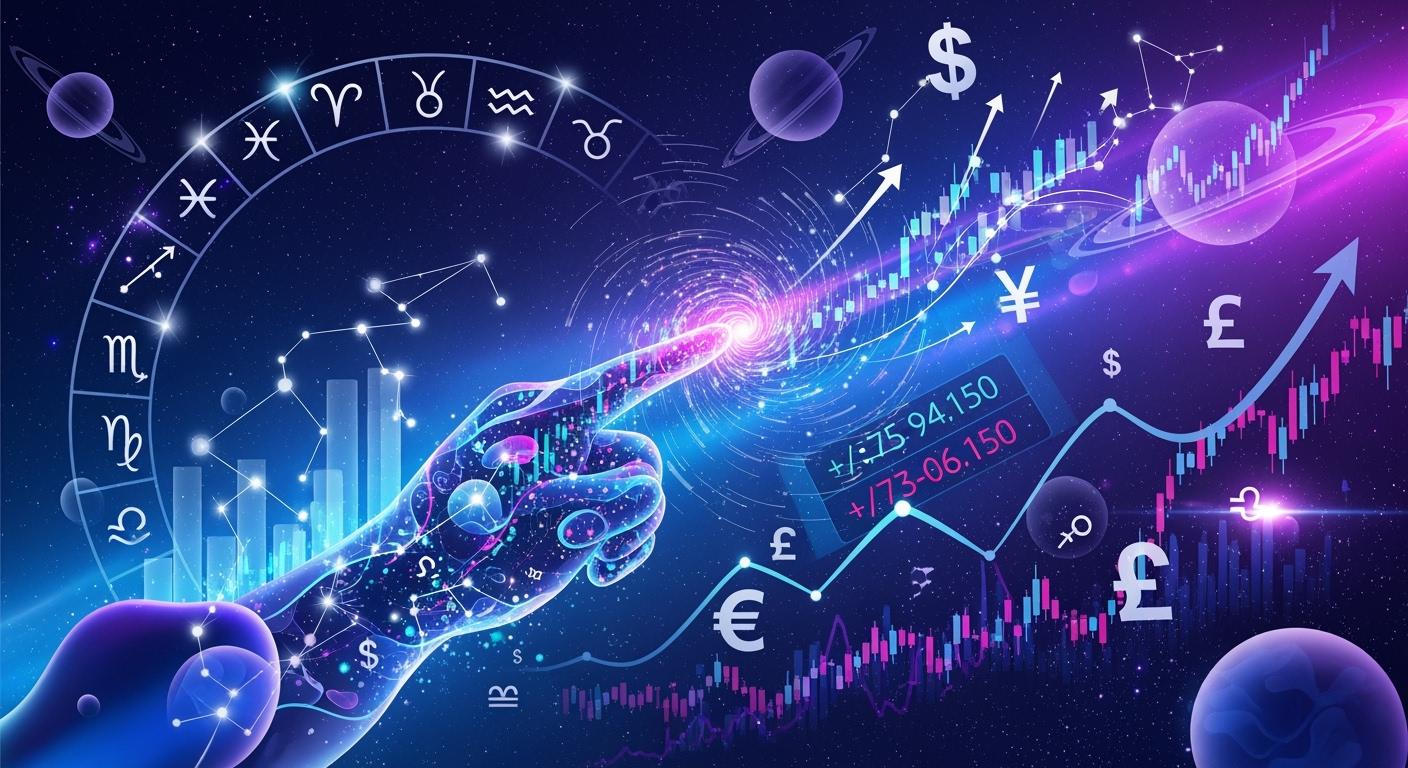
Can ancient wisdom influence today's financial landscape? Do planetary movements offer insights into market fluctuations? Finance Astrology presents a fascinating field of study. It leverages celestial cycles to forecast economic shifts.
This discipline posits that cosmic patterns can predict market behavior. This article delves into the essence of Astrology, its methodologies, and practical applications. Discover this unique approach to market analysis. Astrology provides a novel perspective on financial cycles.
Defining Finance Astrology
What is Financial Astrology?
Financial astrology mixes star movements with stock market guesses. It gives investors a new way of looking at things. People also call it astro-economics. Other names are market astrology, business astrology, or economic astrology. Astro-economics uses star rules to understand changes in money. This includes the stock market, goods, and other money tools. Business astrology uses star signs in companies. This is for many reasons.
It helps in long-term planning. It also helps pick times to launch items. Companies use it for opening new offices. They use it for talks and company mergers. It helps check on rivals and pick staff. This method adds another view to business choices. The main idea is that star patterns can guess market trends. They can also guess money cycles and excellent investments.
History and Evolution
Financial astrology started long ago. It began in old civilizations. Mesopotamia and Babylonia were some of these places. These old groups linked planet spots to farm cycles and money work. This set up the idea for this practice. Star study, including its money uses, comes from old Mesopotamia and Egypt. Mesopotamian star readers, called Chaldeans, were first. They made ways to guess star events. They also explained their effect on people's lives. These early ways formed the base. It showed how stars might link to earth's money patterns.
Astrological Tools and Market Influence
Key Cosmic Concepts
Finance Astrology uses key cosmic ideas. These ideas help understand market trends. Planets, zodiac signs, and aspects are key. Each planet has a special meaning. These meanings connect to money matters.
Jupiter means wealth and growth. Its spot shows money growth or problems.
Venus is about fancy things and comfort. A strong Venus means steady money.
Saturn rules hard work and saving. It can mean tough starts. But it brings steady growth with effort.
Mars drives goals. It also drives business spirit. A good Mars helps with smart risks. It helps reach money success.
Zodiac signs also play a part. They affect money traits.
Earth Signs (Taurus, Virgo, Capricorn) are practical. They are good at saving. They handle money well.
Water Signs (Cancer, Scorpio, Pisces) are feeling-based. They can be emotional with money.
Fire Signs (Aries, Leo, Sagittarius) take big risks. They often start businesses. They also pick risky investments.
Air Signs (Gemini, Libra, Aquarius) have big ideas. They do well in new fields. They also do well working with others.
Planet cycles are also key. Planets move through the zodiac. They affect money markets. Aspects are angles between planets. They show how star energies mix. Beneficial aspects, like trines, bring good market times. Hard aspects, like squares, can mean trouble.
Planetary Cycles and Market Rhythms
Planet cycles make market rhythms. These rhythms match money phases. Jupiter and Saturn are two key planets. They show different market actions.
Jupiter links to growth and expansion. It often brings hope and wealth. Its moves can happen with rising markets. Sometimes, they match market bubbles. For example, Jupiter moved through Sagittarius. This was from late 2019 to early 2020. This time showed strong money growth. It led to a market boom.
Saturn, however, links to care and shrinking. It often matches recessions. It also matches times of money rules. Saturn moved through Leo in 2008. This happened with the world money crisis. It made big groups face problems. Saturn went back into Capricorn in early 2020. This marked world money changes. It also marked market crashes. This was because of the COVID-19 sickness.
Planet | Symbolic Meaning | Financial Correlation |
|---|---|---|
Jupiter | Expansion, optimism, wealth | Bubbles, monetary easing, bullish trends, potential corrections after excess optimism |
Saturn | Discipline, restrictions, fear, karmic lessons | Recessions, contractions, phases of financial discipline, bear markets, regulatory crackdowns, structural recessions |
Other planets also affect market rhythms.
Planet | Market Rhythm/Economic Phase |
|---|---|
Jupiter | Growth, expansion, high confidence, 'Bull Markets' |
Saturn | Stability, limits, downturns, pressure, low confidence, impediments, contraction, 'Bear Markets' |
Uranus | Change and volatility |
Neptune | Uncertainty, often negative for markets, unrealistic expectation |
Pluto | Great power, manipulation, drastic change |
Sun | Confidence, energy, business itself |
Moon’s North Node | Business Volume Curve |
Mercury | Speed, movement, trading itself |
Venus | Small growth |
Mars | Energy, activity, speed, competition |
WD Gann's 'Time Factor' idea backs this up. It says market moves follow certain cycles. These cycles are like natural planet motions. This idea helps guess market highs and lows. It also guesses turnarounds and big breakouts.
Planet alignments also show market shifts. Conjunctions, when planets are together, can mean new starts. They can also mean trend changes. Oppositions, when planets are apart, show tension. They can be turning points. These show times for market mood changes. They also show more activity. Outer planets like Saturn, Jupiter, Uranus, and Neptune have longer cycles. They link to big money trends. Jupiter brings growth and expansion. Saturn means care and shrinking. These show bigger money cycles. They also show long-term market health.
Retrogrades and Market Shifts
Planet retrogrades are like tricks of the eye. Planets seem to move backward from Earth. Many traders think they affect market actions. They often link retrogrades with rethinking. They also link them with turnarounds and changes in speed. This makes them useful for market studies.
Mercury retrograde is very important. It happens 3-4 times a year. It often leads to more doubt. It also causes talk problems. In Finance Astrology, these times mean caution in markets. They can bring possible problems or turnarounds. Traders might use retrograde times to rethink their plans. They may also avoid big choices.
In the past, Mercury retrograde links to bad choices. It also links to wild results in trading trends. This is true for people with weak Mercury spots. It can slow down thinking.
For example, Mercury retrograded from October 31st to November 21st, 2019. Special star alignments hit the stock market. When Mercury retrograded with good planets, it gave good results for day trading. But, the market slowed after the backward move. A market drop happened from November 5th. T
his was because of Jupiter's move. Mercury's burning with the Sun also played a part. This happened from November 8th to 17th. It led to market fall. Yet, everyday goods saw a rise. Later in November, Mercury's link with Mars pushed prices up. This affected goods like cotton, metals, and food.
Applying Astro-Economics to Markets
Company Charts and IPOs
Astrologers use star rules. They look at market trends. They make a company's "birth chart." This uses its IPO date. This chart helps guess the company's money future. It shows good and bad points. It also shows market timing. Analysts can check a country's chart too. This helps guess money trends. It shows the country's money health. This way helps understand company and country money cycles.
Lunar Phases and Trading
Traders watch moon phases. They think these phases change market mood. New Moons often mean new starts. They show rising trends. Full Moons mark prime points. They show trend changes. Full Moons can also cause big swings. They can lead to bad choices. Many market highs happen near Full Moons.
This is true in markets with many small buyers. New Moons mean thinking time. They mean lower energy. They give clear entry spots for traders. Moon eclipses are also key. They can mean sudden swings. They can mean trend changes. Past eclipses on market days link to such events.
Alignments and Economic Events
Planet alignments also link to big money events. History shows many cases. For example, the Great Depression (1929-1939) had Pluto in Cancer. This time tested money safety. The Dot-com bubble Burst (2000-2002) happened with Uranus in Aquarius. This caused rapid tech growth. The 2008 Money Crisis happened with Pluto in Capricorn. This was a time of big change for money systems. The COVID-19 market crash in March 2020 matched a Saturn-Pluto Conjunction in Capricorn. This link often means big public problems. These past links show a tie. It is between star patterns and Earth's money changes. Finance Astrology looks into these ties.
Practitioners and Case Studies
Pioneers of Astro-Economics
Many people looked at the stars. They also looked at money markets. These early thinkers started Finance Astrology. They found ways to watch planets. They linked planet moves to money changes. Their work built astro-economics. They thought star patterns gave good market clues.
Historical Market Correlations
Financial astrologers look at old events. They show how planets matched market shifts. The Bradley Siderograph is a tool. Donald Bradley made it in the 1940s. Many say it can guess stock market trends. Astrologer Arch Crawford guessed the 1987 Stock Market Crash. He used planet spots for his guess.
Astrologers also watch Jupiter and Saturn Cycles. These planets have a 20-year cycle. Their meetings often match big market moves. Some link The Great Depression to Neptune and Pluto. These planets lined up during the 1929 crash. They also lined up during the 1930s downturn. The Saturn-Pluto Conjunction in 2020 got notice. Some astrologers saw it as a bad sign for money. This lineup happened with the COVID-19 sickness.
Modern Approaches and Tools
Today, financial astrologers use new tools. These tools help them check market data. They mix this data with planet cycles. A Financial Astrology Terminal is one tool. This website shows U.S. market data now. It includes the S&P 500, Nasdaq, and Dow. It also covers main stocks and goods. The terminal gives astro-timing signals.
This platform has key features. It shows market data right now. It puts planet spots on stock charts. Users can watch their money with planet signs. It also has good watchlists and alerts. These alerts cover money and star events. The terminal has tools for study. These tools include an ROI Calculator. It also has a Risk-Reward Calculator. A backtesting panel lets users test plans. They can set times for star events. They can also check for trends or wild times. This helps them see money curves. The platform keeps market data fresh. It also counts market holidays in its math.
Financial astrology looks at star patterns. It guesses market trends. It also guesses money cycles. This way gives a new view. It helps understand market changes. It can add to old ways of looking at things. Some people doubt if it works. You should learn about it openly. Star rhythms might affect our money world.
FAQ
What is financial astrology?
Financial astrology looks at planet moves. It sees how they change markets. It says star patterns can guess money cycles. It also guesses good investments. This way gives a new look at markets. People also call it astro-economics. Or they call it market astrology.
How do planets influence markets?
Astrologers think planets show different powers. Jupiter means growth. Saturn means shrinking. Their places and cycles match market feelings. They also match money times. These star ideas help explain market actions.
Is financial astrology scientifically proven?
Science does not fully agree with financial astrology. Many think it is not real science. But, people who use it show past links. They use it to help look at markets. It is still a talked-about way in money.
Can anyone use financial astrology for trading?
New traders can try financial astrology. They should use it with normal market study. Knowing simple star ideas helps. It gives another way to see market changes. Many tools and guides are there to learn.
See Also
Astrology's Wisdom: Effectively Guiding Your Professional Journey and Career Path
Navigating Modern Life: Astrology's Role in Overcoming Contemporary Challenges
Unlocking Inner Truths: Psychological Astrology Fosters Deeper Self-Awareness
Understanding the Differences: Vedic Astrology Versus KP Astrology Explained
Rahu and Ketu: Unveiling the Shadow Planets That Shape Your Destiny